
No… not the naughty chair. This is not a punishment.
Sometimes you just need to separate yourself from the screen.
Get away from the computer. Get some fresh air. Relax and refresh the mind and come back to start again.
Like a reboot for the trader!
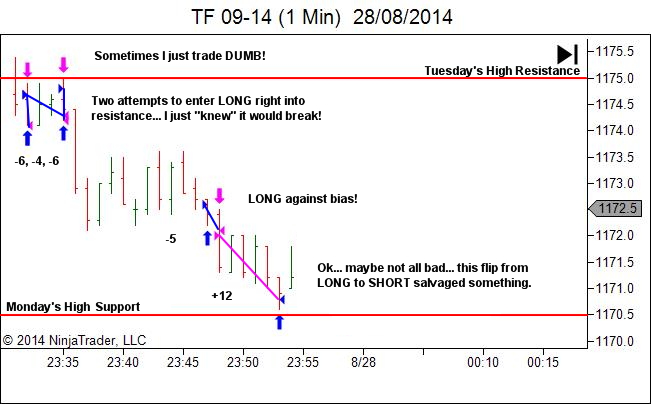
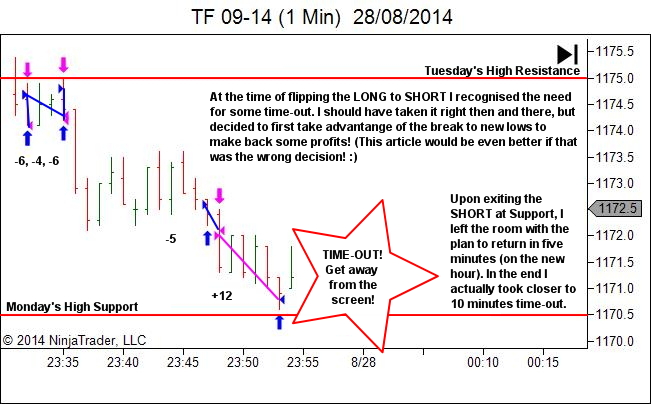
The YTC Price Action Trader contains what I call AA Statements (you’ll need the ebook series to know what that means). They’re slightly modified as well for the lower YTC Scalper timeframes.
But essentially they’re a list of short dot-point procedures relevant to various stages of the trading process.
Let me share two of the relevant AA Statements here:
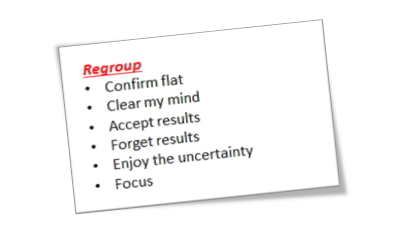
First up is the Regroup procedure.
Most important, before stepping away from the screen, is confirming that I have NO open position and NO pending orders sitting in the market. Totally flat! No risk!
Then it’s time to get out of the room and clear the mind. I find a quick burst of aerobic activity really helps here. Maybe punch a bag or pillow or something else soft! Whatever works for you. Just get rid of that negative energy.
Then relax and BREATHE.
This is time for my breathing exercises. One minute! Five minutes! Ten minutes! Whatever you need to get to a relaxed and calm state.
Accept results! A big part of this is “thanking†the losses for their lesson. It’s amazing the edge that this takes off any remaining negative emotion.
Forget the results… put them in the past.
Enjoy the uncertainty… affirm your love for the challenge that trading provides.
And then head back into the trading room with a clear and focused mind.
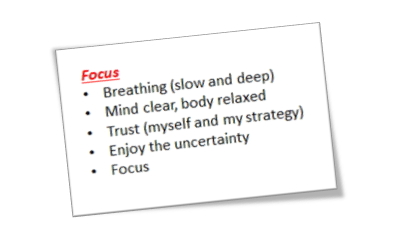
Back at the trading desk it’s time for a quick “Focus†before trading. This is quite simply a repetition of these phrases, to ensure a relaxed body and mind.
The last one, “Focusâ€, being the trigger that takes my attention back to the screen.

Additional Points:
1. Note the importance of the concept of keeping your average loss SMALLER than your average win!
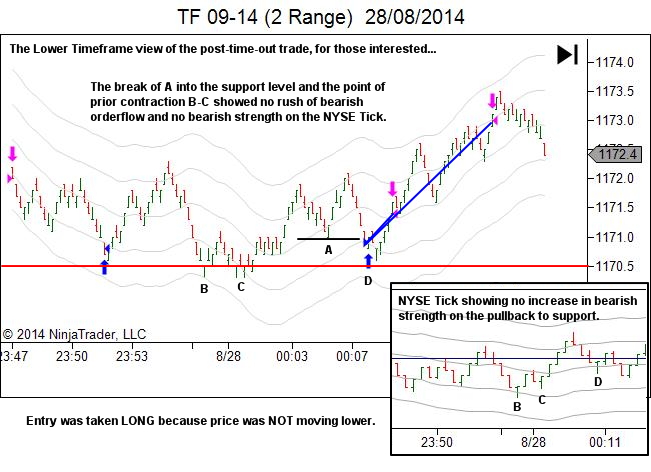
2. Note that entry of the LONG from support was using the same concept discussed in the numerous articles over the last six months – entering LONG because price couldn’t move lower.
Lance Beggs